




House paint helps reduce global warming indirectly through two main mechanisms: heat-reflective paint lowers the heat that builds up on walls and reduces the energy used by air conditioners, while low-carbon paint cuts greenhouse gas emissions from the production stage onward. BegerCool paint combines both approaches, and Beger, the company behind it, tracks and reports its greenhouse gas reduction progress under its Net Zero Pathway every year.
As extreme heat becomes an everyday challenge, global boiling is no longer a distant environmental issue. It shows up as heat trapped inside our homes, heavier air-conditioner use, and the rising energy bills many families now face.
Coping with the heat is not only about switching on the air conditioner or adding insulation. It also means choosing the right building materials, including house paint with heat-reflective properties that reduces the heat absorbed by a building’s surfaces.
One option is BegerCool, a range of cool paint innovations designed to manage heat from sunlight, developed alongside an environmentally conscious approach to product design. So how can house paint help reduce global warming, cut energy use, and prepare homes for the era of global boiling? This article explains.
Can house paint really help reduce global warming?
House paint can help reduce environmental impact, especially paint with heat-reflective properties that may lower the energy needed for cooling, and low-carbon paint whose greenhouse gas emissions are managed throughout the product life cycle.
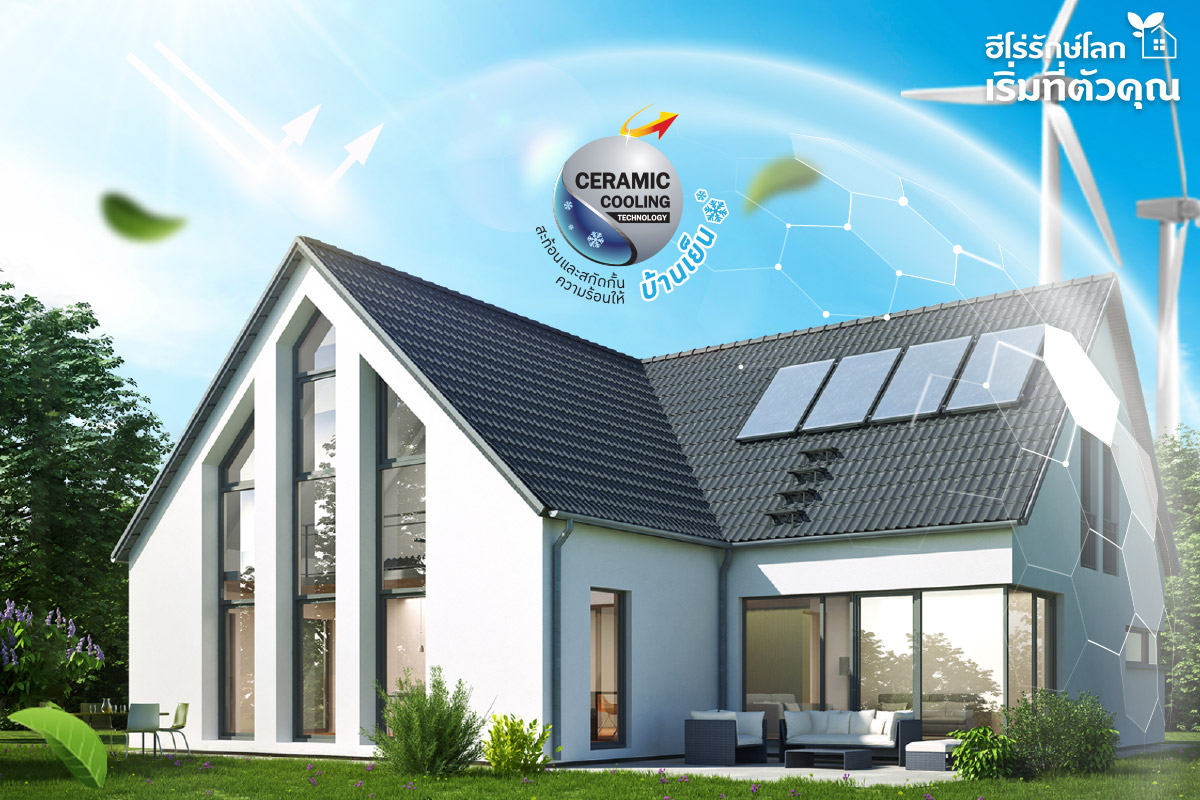
When sunlight hits an exterior wall, the surface absorbs part of that energy and transfers heat into the building, which can raise indoor temperatures, particularly in areas that get several hours of direct sun. Choosing heat-resistant house paint that reflects solar radiation is one way to reduce heat build-up on walls and, in some conditions, ease the workload on air conditioners.
However, painting your house does not directly lower the Earth’s temperature. Instead, it can be part of reducing impacts indirectly, through energy savings and the choice of products that take greenhouse gas emissions into account.
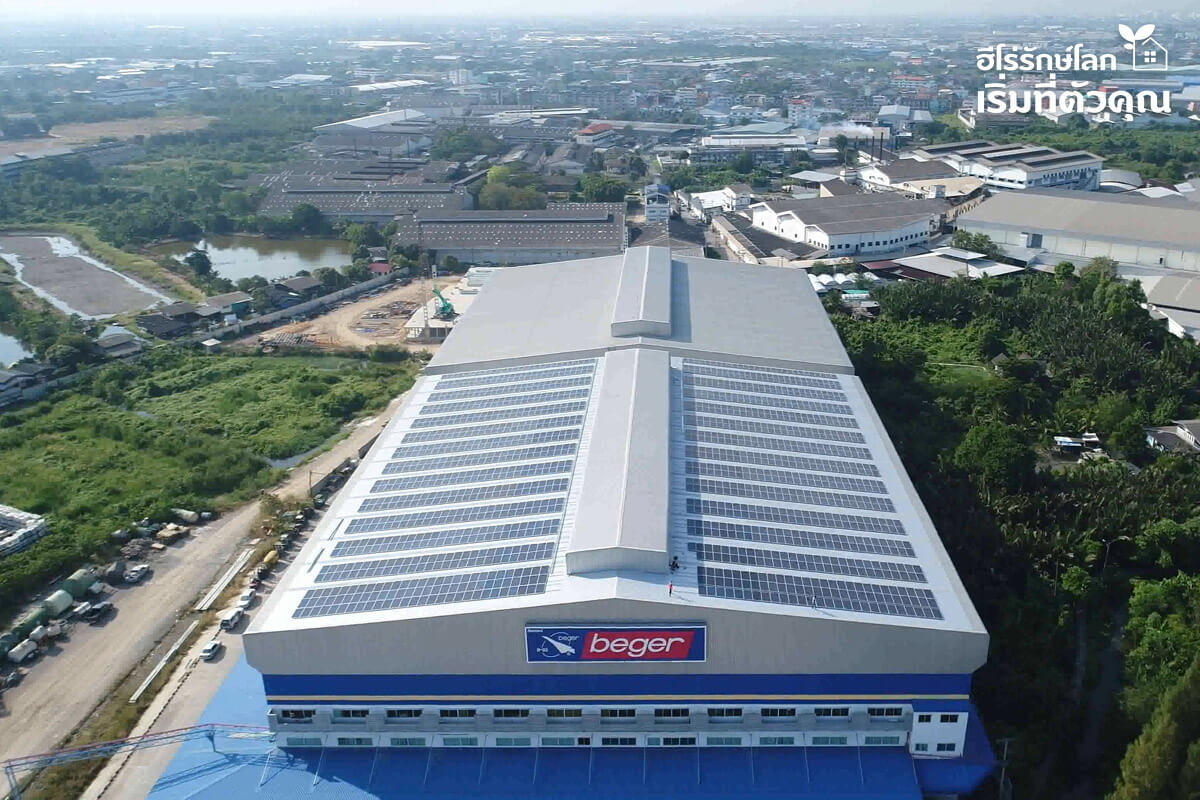
How does BegerCool reduce heat, cut energy use, and help homes cope with global boiling?
Coping with global boiling starts with making homes use energy more efficiently. BegerCool helps reduce heat build-up on building surfaces, while developing products around low-carbon principles and managing environmental impact supports the responsible use of resources.
These approaches can be explained through four key properties and processes.
1. Heat-reflective innovation that keeps walls from storing as much heat
Thailand has a hot climate and receives strong sunlight throughout the year, especially on walls that face the intense afternoon sun. These walls can store heat and pass it into the living space.
BegerCool is developed with Ceramic Cooling Technology, which uses small ceramic particles in the paint to help manage solar heat and reduce heat build-up on building surfaces.
In addition, some BegerCool products feature AeroTech and the R-E-I system, designed to manage heat energy through three mechanisms:
- Reflective: reflects solar energy to reduce heat absorption.
- Emission: helps the surface release stored heat energy.
- Insulation: helps resist heat transfer through the paint film, depending on the paint system.
Homeowners can learn more about AeroTech technology and how the R-E-I system works to better understand cool paint innovations. Heat-reflection performance depends on the product, colour, surface condition, and test conditions, so check each product’s technical data sheet before comparing performance figures.
2. Less heat entering the home may help save energy and electricity costs
When walls store less heat, less heat may transfer into the building, so air conditioners may need less energy to maintain room temperature. Put simply, heat-reflective paint reduces heat build-up on walls, reduces the heat entering the home, and may ease the workload on air conditioners. Lower electricity use can indirectly help reduce greenhouse gas emissions, depending on the energy sources used to generate that electricity.
Many people still ask: does cool paint really lower electricity bills?
The answer is that it can help, but actual savings depend on several factors, such as:
- The orientation of the house and how long walls are exposed to sunlight
- The wall area painted with heat-reflective paint
- The performance of roof and wall insulation
- The efficiency of the air conditioner and its temperature setting
- Household habits and outdoor weather conditions
If you are planning to make your home cooler, read more about how cool paint reduces air-conditioner load to find the heat-reduction approach that suits your home.

3. Low-carbon paint that reduces environmental impact from the production stage
Beyond saving energy while you live in the home, another key factor in eco-friendly house paint is managing environmental impact across the product life cycle. Paint production generally uses resources, raw materials, and energy at many stages, from sourcing raw materials and manufacturing to transport and end-of-life handling.
Beger focuses on developing low-carbon paint through measures such as using solar energy in production and replacing some raw materials with plant-based, or bio-based, materials. Some products have also received the Carbon Footprint Reduction Label, which shows that they have passed the assessment and reduced greenhouse gas emissions according to the defined criteria.
For example, Beger has published information on BegerCool DiamondShield 15 receiving the Carbon Footprint Reduction Label from the Thailand Greenhouse Gas Management Organization (Public Organization). Labels and certifications may vary by product and certification period, so consumers should check the latest information from the manufacturer and the issuing agency before deciding.
Carbon reduction at the product level is also linked to organisation-level goals: Beger tracks and reports its progress under its Net Zero Pathway every year.
4. Low-VOC paint reduces volatile emissions linked to air quality
Beyond energy savings and lower carbon impact, choosing house paint with low levels of volatile organic compounds, or low-VOC paint, is another factor worth considering. VOCs can evaporate from certain products, including architectural paint, and some of them affect air quality and can take part in chemical reactions that form air pollution.
Choosing low-VOC paint therefore reduces volatile emissions compared with paint containing higher VOC levels under comparable conditions of use. However, it is important to distinguish clearly between low-VOC paint and low-carbon paint: low-VOC focuses on volatile compounds and air quality, while low-carbon relates to greenhouse gas emissions within a defined assessment scope.
Both properties matter when choosing products that care for occupants and the environment, but one cannot substitute for the other’s proof of certification.
Global boiling and hot homes: how does heat-reflective paint help?
As outdoor temperatures rise, homes exposed to strong sunlight can store more heat, especially walls and roofs in direct sun. The problem is more pronounced in cities with many buildings, roads, and concrete surfaces, which is linked to the urban heat island effect. This happens when urban areas are hotter than their surroundings because they contain many heat-absorbing materials, fewer green spaces, and heat from human activity.
Heat-reflective paint is one way to cope with hot weather, because it reduces the solar energy absorbed by building surfaces and may reduce the heat transferred into the home. For homes that gain most of their heat through the roof, combining heat-reflective roof paint with heat management on the walls covers more of the sun-exposed surfaces.
Reducing the urban heat island effect is a different issue from directly lowering the planet’s average temperature, but the two are connected through energy use and greenhouse gas emissions.
Which house paints are eco-friendly? Check the labels before you buy
The simplest way to tell whether a house paint is eco-friendly is to check for certification labels on the paint can, in the product catalogue, or in the product’s technical documents. Choosing eco-friendly paint should not rely only on claims such as “eco-friendly” or “energy-saving”; instead, check the certification evidence for each specific product.

1. Carbon Footprint Reduction Label
This label shows that a product has passed the assessment and reduced greenhouse gas emissions according to the requirements of the Thailand Greenhouse Gas Management Organization (TGO). A paint that has received the Carbon Footprint Reduction Label (gold label) has reduced greenhouse gas emissions, especially carbon dioxide, in line with the criteria. BegerCool DiamondShield 15 is the first and only house paint in Thailand to receive this label.
2. Green Label
The Green Label is an environmental certification from the Thailand Environment Institute that assesses products against requirements for each product category. For architectural paint, a certified product must meet criteria on VOC emissions and be free from heavy metals such as mercury and lead.
3. High-Efficiency Energy-Saving Label
This label helps consumers identify products that meet energy-efficiency criteria, or have energy-saving properties, for their certified product category.
4. Environmental Product Declaration (EPD)
An EPD, or Environmental Product Declaration, is a document that discloses a product’s environmental impacts within a stated assessment scope. It helps consumers and professionals review environmental information systematically.
Beger announced EPD certification for a total of 10 cool paint and construction chemical products on 18 June 2025, another way of disclosing the environmental impact of its products. Learn more about BegerCool standards and EPD certification to support your decision. Always check the latest certification status and the certified product models before buying.
How is Beger moving towards Net Zero? Annual tracking and reporting of greenhouse gas reductions
The organisation has established that progress under its plan towards net zero greenhouse gas emissions (Net Zero Pathway) is tracked, evaluated, and reported every year, to ensure its operations stay in line with the targets and guidelines certified by the Thailand Greenhouse Gas Management Organization (Public Organization) (TGO).
The organisation prepares an annual report on its greenhouse gas emissions and removals, covering the volume of greenhouse gas emissions, performance compared with the base year and the Net Zero Pathway targets, the results of greenhouse gas reduction measures, changes affecting emission volumes, as well as problems, obstacles, and corrective actions where performance does not meet the targets.
Carbon labels and EPDs describe the environmental performance of each paint product, while the Net Zero Pathway sets the greenhouse gas reduction direction for the whole organisation. Having both levels gives consumers confidence that low-carbon paint development is not a one-off product initiative, but part of a verifiable long-term plan.
What is a Net Zero Pathway?
A Net Zero Pathway is an organisation’s roadmap for reducing greenhouse gas emissions, from its base year to the target year when its net greenhouse gas emissions reach zero, meaning the emissions it releases are balanced by those it removes from the atmosphere. The pathway helps the organisation set short- and long-term targets systematically, rather than simply announcing a goal.
Beger announced its participation in the “Plan for Net Zero Pathway” programme under the supervision of TGO in November 2025, to set a framework for reducing greenhouse gas emissions in line with international standards (Source: Prachachat Turakij, 2025). Earlier, Beger established the Net Zero Innovation Center to develop environmentally conscious paint innovations (Source: Brand Buffet, 2025).
- Base year: [PLACEHOLDER: base year, as stated in the verified report]
- Net Zero target year: [PLACEHOLDER: target year, as stated in the TGO-certified plan]
- Interim target: [PLACEHOLDER: % reduction vs. base year and target year, if any]
What does the annual greenhouse gas emissions and removals report cover?
The information in Beger’s annual report falls into six areas, summarised in the table below.
| Information in the annual report | Details | Why it matters |
|---|---|---|
| 1. Greenhouse gas emissions | The organisation’s greenhouse gas emissions and removals in the reporting year | Shows the actual carbon emitted |
| 2. Results vs. base year and targets | Performance compared with the base year and the Net Zero Pathway targets | Shows whether reductions are on track |
| 3. Results of reduction measures | Outcomes of measures taken, such as solar energy use or bio-based raw materials | Shows which measures actually work |
| 4. Changes affecting emissions | Factors that changed the figures, such as production capacity or process changes | Explains the numbers transparently |
| 5. Problems and obstacles | Constraints that kept performance from meeting targets | Identifies what needs to be fixed |
| 6. Corrective actions | Improvement plans where performance falls short of the targets | Brings the plan back onto the Net Zero path |
Reporting every year keeps Beger’s greenhouse gas reductions continuous and measurable, and allows the plan to be adjusted promptly when performance falls short of the targets.
For details of the certification criteria, see the TGO guidelines for moving towards Net Zero on the Thailand Greenhouse Gas Management Organization website.
How do product labels differ from an organisation’s Net Zero Pathway?
Product labels describe each paint product, while a Net Zero Pathway describes the targets and progress of the whole organisation. The two levels complement each other but do not replace each other.
| Level | Examples | What it tells consumers |
|---|---|---|
| Product | Carbon Footprint Reduction Label, EPD, Green Label | How this paint reduces carbon or meets environmental criteria |
| Organisation | Net Zero Pathway and the annual greenhouse gas emissions and removals report | How the manufacturer plans system-wide greenhouse gas reductions and tracks results |
Follow the news and Beger’s sustainability performance, including progress on Beger’s Net Zero journey and carbon labels, on the News & Activities page.
5 ways to choose house paint and prepare your home for global boiling
Besides choosing heat-reflective house paint, improving other parts of the home helps manage heat and energy use more effectively.
1. Choose exterior paint with heat-reflective properties
Look for paint with solar reflectance data, especially for walls in strong sunlight, and choose a product suited to the surface.
2. Choose colours by their solar reflectance
Light colours generally absorb less solar energy than dark colours, but some dark-colour formulas with infrared-reflective technology can also perform well against heat, so check the test data for each colour.
3. Add insulation and ventilation
Installing suitable insulation, reducing heat from the roof, and improving ventilation all help reduce heat entering living spaces.
4. Use natural shade to reduce heat
Planting trees, installing awnings, or designing shaded areas in the right places can reduce direct sunlight on walls and windows.
5. Choose durable paint and maintain it properly
Using durable products suited to the environment, and preparing surfaces correctly according to the manufacturer’s instructions, reduces the need for early repairs or repainting, which can save materials and resources over time. After painting, handle materials and packaging properly. If you want to reuse paint buckets, choose safe uses and follow the cleaning instructions. See more in paint bucket recycling ideas.
Frequently asked questions about house paint and global warming
How can house paint help reduce global warming?
Heat-reflective house paint can reduce heat build-up on building surfaces and may lower the energy used for cooling. Low-carbon paint can help reduce greenhouse gas emissions within the product’s assessed scope and evidence.
Does BegerCool really lower electricity bills?
It can help reduce electricity used for air conditioning by reducing the heat entering the building, but actual savings depend on the house, sun exposure, insulation performance, and air-conditioner use.
How is eco-friendly house paint different from regular house paint?
Eco-friendly house paint should have verifiable environmental information, such as VOC content, greenhouse gas emissions data, certification labels, or life-cycle impact data. Properties vary from product to product.
Are low-VOC paint and low-carbon paint the same?
No. Low-VOC paint focuses on reducing volatile organic compounds, while low-carbon paint focuses on managing greenhouse gas emissions within an assessment scope. A product can have both properties, but each must be verified separately.
How does heat-reflective paint help homes cope with global boiling?
Heat-reflective paint reduces heat build-up on building surfaces and may lower the need for cooling energy, helping homes adapt better to extreme heat. It works best alongside insulation, shading, and appropriate building design.
What is Beger’s Net Zero Pathway?
Beger’s Net Zero Pathway is the company’s plan to reach net zero greenhouse gas emissions, following the guidelines of the Thailand Greenhouse Gas Management Organization (Public Organization), or TGO. Beger tracks, evaluates, and reports its progress every year.
How does Beger report its greenhouse gas reductions?
Beger prepares an annual greenhouse gas emissions and removals report covering emission volumes, results against the base year and targets, the outcomes of reduction measures, changes affecting the figures, and problems and corrective actions when results fall short of the targets.
Conclusion: BegerCool, a cooler-home choice for the era of global boiling
Coping with global boiling is not just about lowering the temperature inside your home. It is also about using energy efficiently and choosing products that care for the environment.
BegerCool is an option for homeowners who want to reduce heat build-up on building surfaces, with heat-reflective paint innovation that may ease the workload on air conditioners. At the same time, Beger focuses on developing low-carbon paint and environmental certifications for selected products, alongside annual tracking and reporting of its progress under its Net Zero Pathway.
Choosing house paint today is not only about beauty and durability. It is part of creating a home that is comfortable, uses energy wisely, and is ready for a changing climate. A cooler home, smarter energy use, and care for the environment, all at once, with cool paint innovation from BegerCool.
Get free colour advice Get a free home colour design service